Chain of Custody in an Environmental LIMS: Evaluate the Record, Not the Demo
Use a sample-based evaluation to test whether a LIMS can preserve and reconstruct the custody record your environmental work requires.

A chain-of-custody evaluation should answer one practical question: can your laboratory reconstruct the history of a sample with the identities, events, conditions, and supporting records required for the work?
That is a better buying test than asking whether a system “has chain of custody.” The phrase can describe anything from a scanned form to a detailed event history. Your laboratory needs to decide which record is authoritative, where custody begins and ends, which handoffs matter, and how exceptions are preserved.
EPA’s 2025 field activities procedure provides a useful public reference point for EPA field work. It calls for unique identification and a custody record that includes, as appropriate, the date, time, sample types, location, and each person who takes possession. It also addresses manual methods when the primary electronic device fails. Those requirements apply within the procedure’s stated scope. A commercial laboratory should verify its obligations against the current method, program, contract, quality plan, accrediting-body criteria, and state rules governing each service.
Start with the record your lab must produce
Before comparing screens, select one representative sample journey. Use sanitized data, but make the scenario operationally real: field collection, courier handoff, laboratory receipt, condition check, storage placement, internal movement, analysis, retention, and final disposition if those stages belong in your governing process.
List the records that must remain connected to that journey. Depending on the program, they may include:
- field and laboratory sample, container, cooler, shipment, and project identifiers;
- collection, relinquishment, receipt, and other required custody events;
- receipt observations and acceptance decisions;
- preservation, temperature, seal, or condition records;
- storage locations and internal transfers;
- deviations, corrections, approvals, and communications; and
- attachments or references to controlled records held elsewhere.
Use this as a planning list, not a universal custody form. Remove fields that do not apply and add every field required by the lab’s current governing documents.
Evaluate six parts of the custody record
1. Identity
Test whether the system keeps the field identifier, laboratory identifier, container identifier, and derived sample or aliquot identities distinct but connected. A search for any approved identifier should lead to the same sample history without collapsing unlike objects into one record.
Include a deliberate near-match: two samples with similar names, a corrected field ID, or multiple containers from one sampling location. Ask the vendor to show how a user resolves the ambiguity without silently replacing the original information.
2. Possession and control
Define what counts as a custody event in your operation. A signed transfer between people may be one event. Placement in a secure designated area may be another. A status such as “received” is not automatically the same as a documented transfer.
For each required event, inspect the actor, date and time, time zone, location, action, and related object. Determine whether an electronic action represents the person who actually took possession or the person who entered the record later. If delayed entry is permitted, preserve both event time and entry time under the lab’s procedure.
3. Handling and condition
Custody is connected to sample integrity, but the two are not identical. Ask where the lab records shipment condition, container count, seal observations, preservation checks, temperature observations, damage, shortage, or other receipt facts required by the applicable program.
Then test an exception. The paperwork and delivered containers might disagree. The system should make the discrepancy visible, route it to an authorized decision-maker, and preserve the disposition. Do not accept a demo in which the exception disappears when a user clicks “continue.”
4. Corrections and late information
Enter one event incorrectly and correct it through the proposed workflow. Can a reviewer see the original value, corrected value, responsible user, timestamps, reason, and required authorization? Can the lab distinguish a correction from a new transfer?
Repeat the test with a late field form or client clarification. The goal is not to prevent every change. It is to preserve a reviewable history under the lab’s approved record-control process.
5. Retrieval and assembly
Ask a user who did not create the sample to reconstruct the record. Start from a report number, field identifier, or other identifier a real reviewer might receive. Prioritize completeness over a one-click PDF.
Compare the reconstructed package with your predefined record list. Check whether electronic events, handwritten forms, exception decisions, and disposition remain intelligible together. Confirm which source is authoritative when the same fact appears in more than one place.
6. Continuity when technology fails
EPA’s field procedure contemplates hard-copy or manual means when electronic methods fail or are not possible. Your continuity design may differ, but include an outage path if work must continue without the primary system.
Ask how temporary identifiers are assigned, duplicate IDs are prevented, manual records are reconciled, and imported or transcribed events remain distinguishable from directly captured events. Test the reconciliation with a mock outage rather than accepting a policy statement.
Use a custody evidence plan
Record the demonstration in a compact evidence plan:
Sample identity
- Governing source: Laboratory-selected document.
- Capture point: Field or receipt.
- Responsible role and correction path: Defined by the laboratory.
- Retrieval test: Search by each identifier.
Possession event
- Governing source: Laboratory-selected document.
- Capture point: Transfer.
- Responsible role and correction path: Defined by the laboratory.
- Retrieval test: Rebuild the event order.
Receipt condition
- Governing source: Laboratory-selected document.
- Capture point: Receiving.
- Responsible role and correction path: Defined by the laboratory.
- Retrieval test: Show normal and exception cases.
Supporting record
- Governing source: Laboratory-selected document.
- Capture point: Relevant workflow stage.
- Responsible role: Defined by the laboratory.
- Correction path: Versioned process.
- Retrieval test: Export the record with sample history.
For each item, add the exact governing document name, version, and section. This keeps a vendor preference from being mistaken for a requirement and makes future change review possible.
Set acceptance criteria before selection
Define which facts are mandatory, which may be attached, which roles may create or correct them, which exceptions block later work, and which outputs a reviewer must retrieve. Classify each result as standard, configured, custom, external, or unavailable. Capture configuration dependencies and ownership.
The strongest comparison is simple: give every shortlisted vendor the same sanitized journey, introduce the same discrepancy and correction, then compare the final record with your evidence plan.
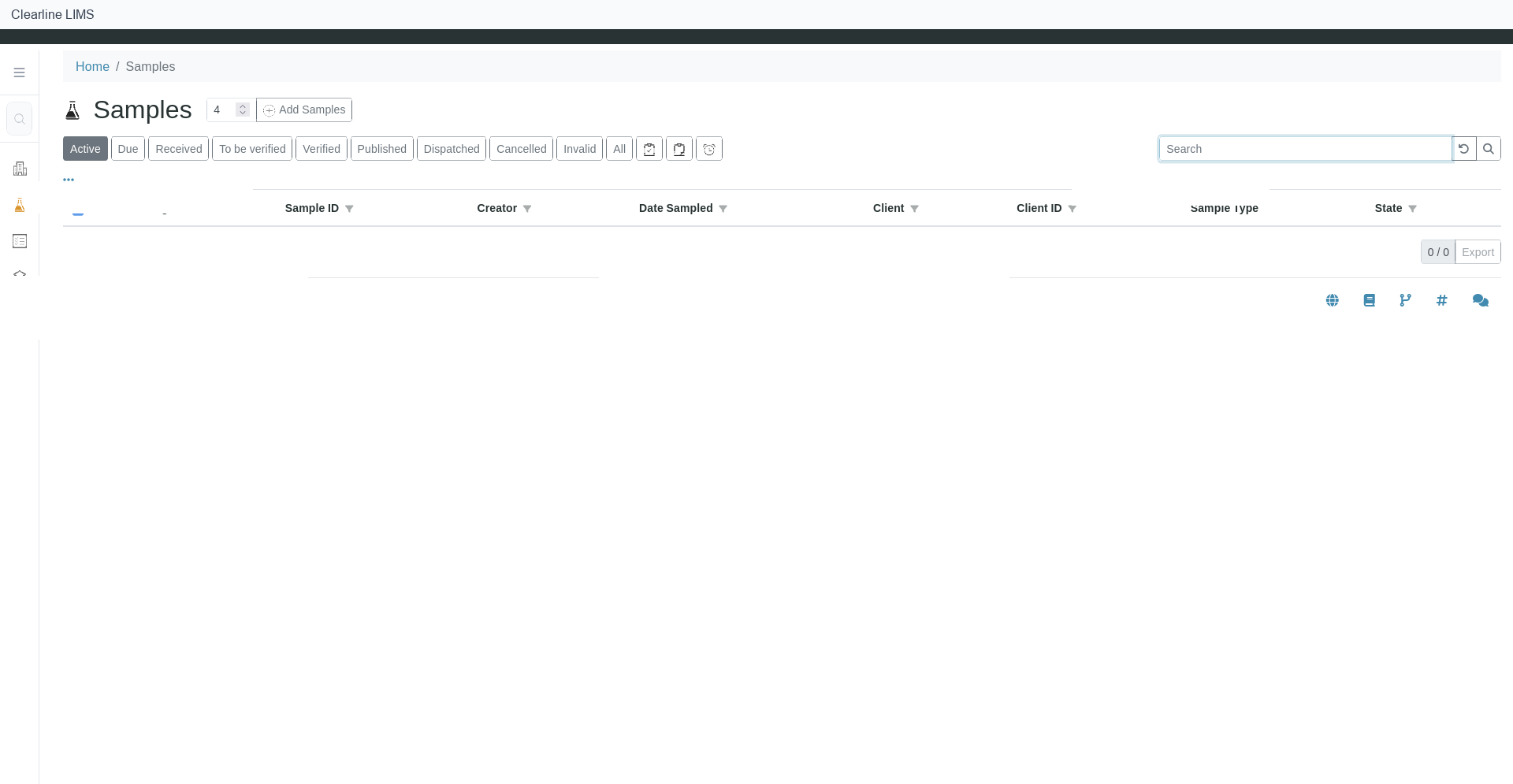
Evaluate your custody scenario with Clearline
If custody reconstruction is the decision in front of your team, schedule a Clearline LIMS evaluation and bring one sanitized sample journey plus your evidence plan. Ask for required fields, roles, exception paths, correction history, outage reconciliation, and the retrieval package to be addressed in the written scope.